

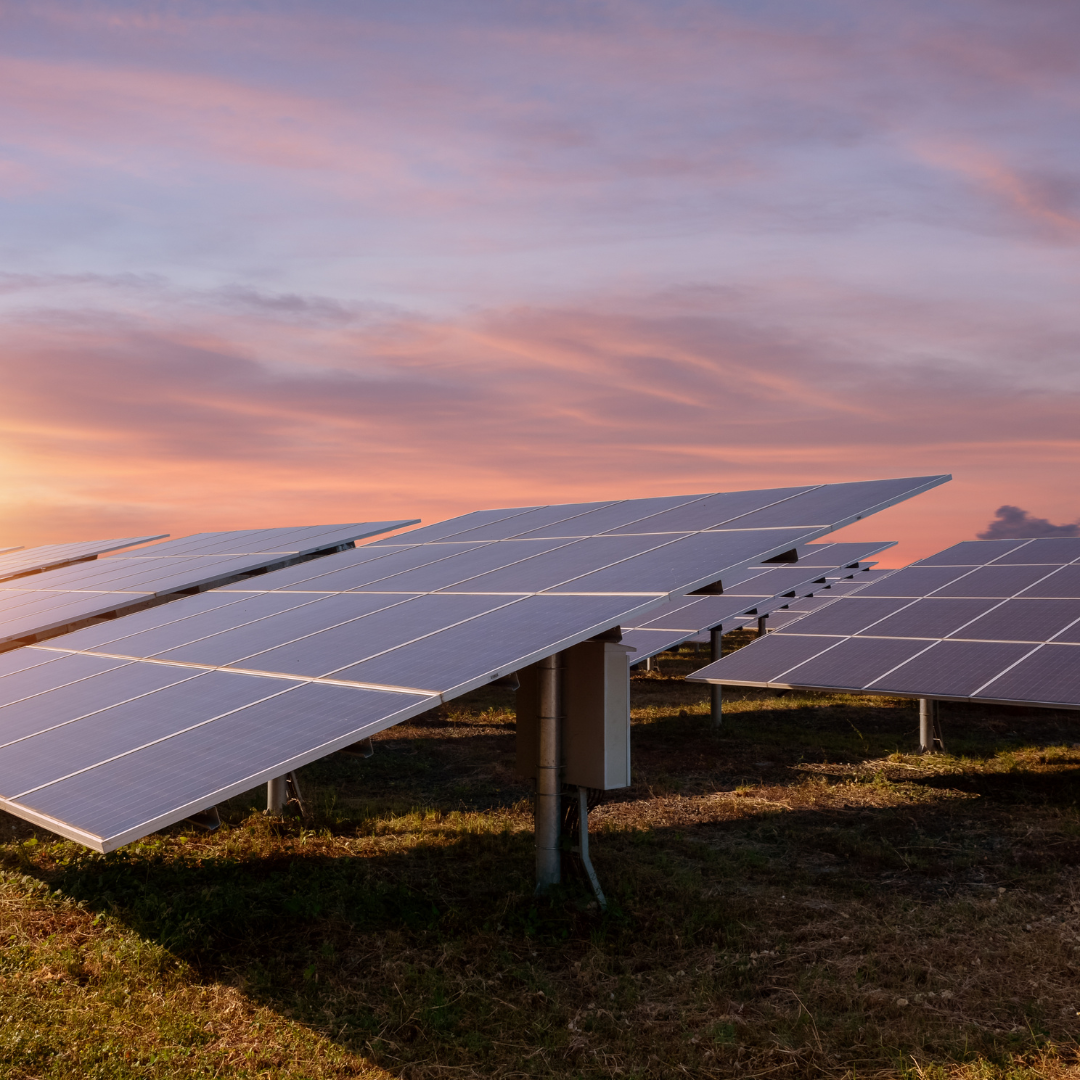
 South Africa is in the middle of a battery revolution. Solar installations with lithium-ion storage are appearing on rooftops across the country. Electric vehicles are arriving on our roads. Data centres are expanding their backup power systems. Mining operations are electrifying underground equipment.
This growth is positive. It reduces our dependence on the grid and moves us toward cleaner energy.
But it comes with a fire risk that most businesses are not prepared for.
Lithium-ion battery fires are fundamentally different from conventional fires. They burn hotter, produce toxic gases, and can re-ignite after being extinguished. The fire extinguishers in most South African buildings and facilities are chemically incapable of stopping them.
This article explains the risk, the science, and the solutions available to South African businesses in 2026.
How Big Is the Lithium-Ion Battery Fire Risk in South Africa?
The risk is growing in direct proportion to battery adoption.
South Africa’s lithium-ion battery market was valued at USD 268.88 million in 2025. It is projected to reach USD 662.83 million by 2034, growing at 10.55% per year. The country has 7,781 MW of installed solar capacity, much of it paired with battery storage.
In Johannesburg alone, approximately six lithium battery fires are reported every month.
Since June 2025, just four reported lithium battery fire incidents caused damages exceeding R45 million. That is an average of more than R11 million per incident.
The SA government’s 150% tax deduction on electric vehicle investments, effective from March 2026, is accelerating fleet electrification. More batteries in more places means more fire risk in more facilities.
Most South African buildings and vehicle depots are still equipped with fire extinguishers rated for Class A (ordinary combustibles), Class B (flammable liquids), and Class C (electrical) fires. None of these classes address lithium-ion battery thermal runaway.
 Why Are Lithium-Ion Battery Fires Different from Conventional Fires?
Lithium-ion battery fires involve a process called thermal runaway. When a battery cell is damaged, overcharged, or exposed to excessive heat, it enters a self-sustaining chemical reaction that generates extreme temperatures and releases flammable and toxic gases.
Three characteristics make these fires uniquely dangerous:
1. Extreme heat: Battery fires can reach 1,100°C, far exceeding the temperatures conventional fire suppression systems are designed to handle.
2. Toxic gas emission: Thermal runaway releases hydrogen fluoride, carbon monoxide, and other toxic gases that create immediate health hazards for anyone nearby.
3. Re-ignition: Unlike conventional fires, battery fires can re-ignite hours or even days after the initial fire appears to be extinguished. The chemical reaction continues inside the battery cells even after external flames are suppressed.
Firefighters do cool battery fires with water, but in large volumes and over hours, as crews did at a container battery fire in Roodepoort in January 2026 (Green Building Africa, 9 September 2026). A garden hose or a small extinguisher is a different thing, so get out and call the fire service. CO2 extinguishers cannot cool a battery in thermal runaway. Foam does not penetrate the cell structure where the reaction is occurring.
Which Industries in South Africa Are Most at Risk?
Any industry that uses, stores, or transports lithium-ion batteries faces this risk. The highest-risk sectors include:
Solar energy: Every solar installation with battery storage (and there are thousands across SA) contains lithium-ion batteries that can enter thermal runaway if damaged, improperly installed, or exposed to extreme heat.
Electric vehicle fleets: As EV adoption accelerates, vehicle depots, charging stations, and maintenance facilities need battery-specific fire protection.
Data centres: UPS (uninterruptible power supply) systems in data centres rely on lithium-ion batteries. A battery fire in a data centre causes not only physical damage but also data loss, service interruption, and significant financial and reputational harm.
Mining: Underground mining operations increasingly use battery-powered equipment. A lithium battery fire underground, where ventilation is limited and evacuation is difficult, represents a worst-case safety scenario.
Hospitality: Hotels and conference centres contain lithium batteries in backup power systems, kitchen equipment, and thousands of guest devices charging simultaneously.
 What Is FlameBlock Lithium Black and How Does It Work?
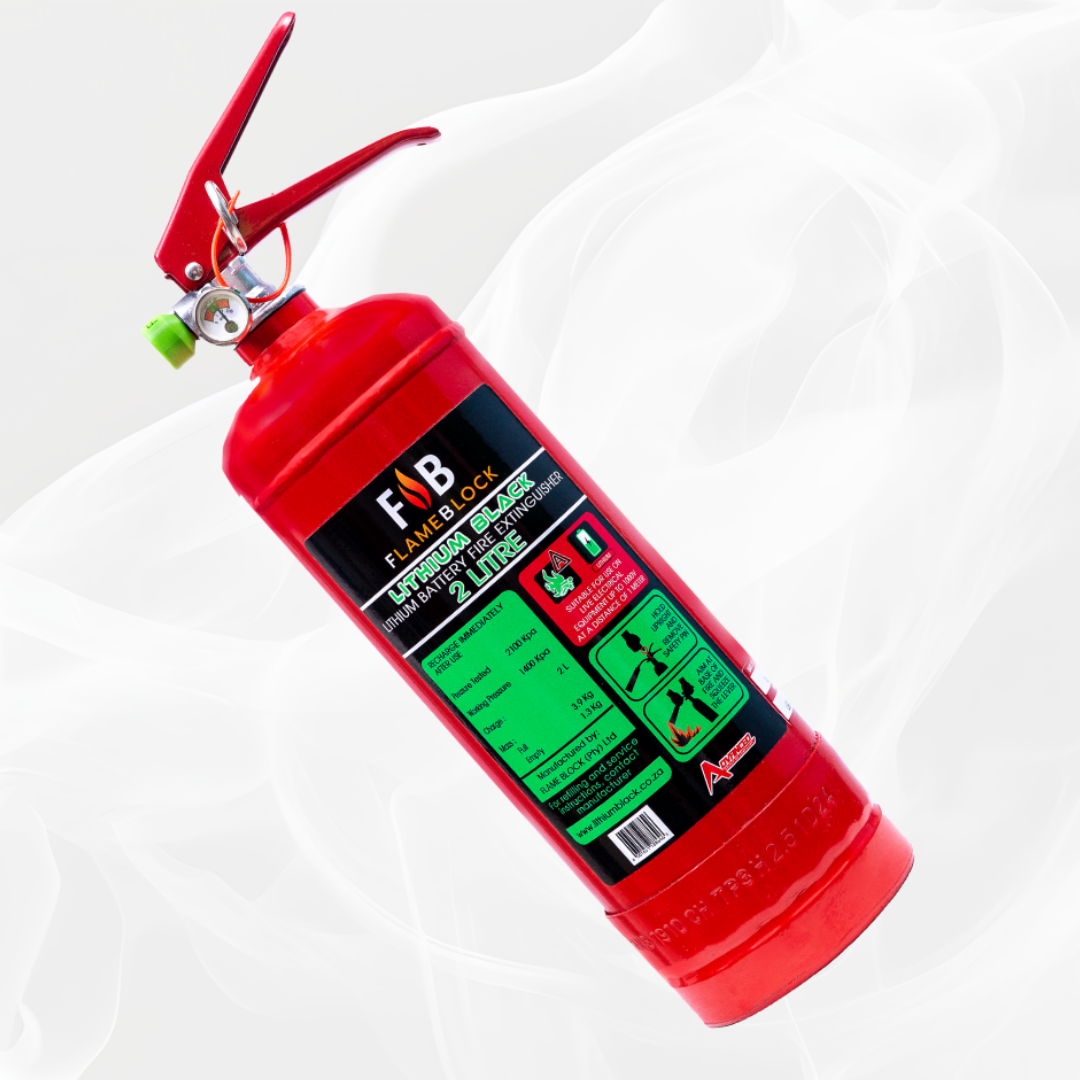
FlameBlock Lithium Black is a nano-technology mineral-salt fire extinguisher engineered specifically for lithium-ion battery fires.
It was developed over two years of research into lithium-ion battery chemistry by FlameBlock’s team, including chemist Dr. Deon de Wet-Roos, and tested at the University of Stellenbosch and Ignis Fire Labs.
Lithium Black works by:
– Rapidly cooling the battery from 1,100°C to 80°C in under 30 seconds
– Suppressing the thermal runaway reaction at the chemical level
– Containing toxic and flammable gas emissions
– Preventing re-ignition
The product is available in three portable sizes (2L, 6L, and 9L) for reactive fire response. For proactive protection, FlameBlock also offers an in-box suppression system that can be built directly into battery casings, providing automatic suppression if thermal runaway begins.
This is not a modified conventional extinguisher. It is a new category of fire response built from the ground up for the specific chemistry of lithium-ion battery fires.
How Should South African Businesses Prepare?
Every business that uses lithium-ion batteries should take five steps:
1. Audit your battery inventory: Identify every location where lithium-ion batteries are used, stored, or charged. This includes solar installations, UPS systems, forklifts, fleet vehicles, and portable devices.
2. Assess your current fire response: Determine whether your existing fire extinguishers are rated for lithium-ion battery fires. In most cases, they will not be.
3. Deploy battery-specific fire suppression: Place lithium-ion battery fire extinguishers at every location identified in your audit. Consider in-box suppression systems for high-value or high-risk battery installations.
4. Train your staff: Ensure that everyone who works near lithium-ion batteries knows the signs of thermal runaway (swelling, hissing, smoke, unusual heat) and the correct response protocol.
5. Review your insurance: Confirm that your insurance policy covers lithium-ion battery fire incidents. Some policies exclude or limit coverage for battery-related fires.
The battery revolution is not slowing down. The question is whether your fire safety infrastructure is keeping pace.
For more information or a fire risk assessment: +27 11 590 3337 | sales@flameblock.co.za |


